
"I Love You, Too"


We have young children and are firmly in the stage of helping what they know intellectually become what forms them volitionally. Anyone who has raised children recognizes the difference between knowing what is right and having the will to choose it. A child may know that telling the truth matters, that kindness is good, or that obedience leads to flourishing, and yet the moment still arrives when knowledge alone is not enough to shape the decision.
If we are honest, this dynamic is not reserved for children. It is simply the human experience. And in many ways it is also the experience of faith. There are things we believe about God that we do not always functionally trust. We affirm them, we teach them, we even defend them, and yet our lives often reveal a gap between belief and reliance.
I know that God is trustworthy and good, and yet I still find myself anxious about financial matters or the uncertainty of the future. Recently I received a call about a young man I had counseled in the past who died by suicide. News like that has a way of pressing on the deeper questions of the heart. It exposes how fragile our sense of control can be and how quickly we reach for explanations or stability. In moments like these, the distance between what we know and what we trust becomes more visible.
Believing is not flat and static
The Reformers described faith with three Latin terms that help clarify this movement of the heart: notitia, assensus, and fiducia.
Notitia refers to knowledge—the content of faith. It is the intellectual apprehension of the truths of the gospel. We learn that God is loving, that Christ died and rose again, that grace is offered freely to the world. Faith begins here because it must have an object; it must have something to believe.
Assensus is agreement. It is the moment when a person affirms that these things are true. The mind recognizes the coherence of the gospel and accepts it as reality. Many people in the church live comfortably in this space. They know the doctrine and they agree with it.
But the Reformers insisted that saving faith moves further. The third term is fiducia, which means trust. It is not merely believing that something is true but entrusting oneself to that truth. It is the difference between saying God is loving and trusting that God loves me. It is the difference between affirming that Christ saves and resting in the conviction that Christ has saved me.
John Wesley and Trusting Belief
This movement from knowledge to trust has appeared again and again in the history of the church. One of the most well-known examples is John Wesley’s experience on Aldersgate Street in 1738. Wesley had already lived a deeply religious life. He was ordained, disciplined, and theologically trained. Yet while listening to Martin Luther’s preface to the Epistle to the Romans being read that evening, he wrote that he felt his heart “strangely warmed.” In that moment he said he trusted Christ alone for salvation and received assurance that Christ had taken away his sins. The doctrines had not changed, but something within him shifted from agreement to trust.
My own journey toward trusting that God truly loved me did not happen in a single moment. It began a few years ago and has unfolded slowly as part of a deeper healing from a largely transactional approach to my life with God. Ministry can easily reinforce that kind of framework. Pastors preach, lead, counsel, organize, and carry responsibilities that can subtly shape how they imagine their relationship with God. Without realizing it, the heart can begin to measure God’s approval by faithfulness in tasks, productivity in ministry, or the outcomes of leadership. Childhood experiences and personal wirings created in me this transactional expectation of love and acceptance. I am loved by how good I am, how successful I am, or how well I perform certain tasks. Take marriage for example, my experience of love from my wife subtly becomes directly related to how well I perform the husbandly role. I want to be a good husband but when I fall short, I convince myself I am unlovable. This human relationship is a microcosm for how I see God.
Over time I began to recognize how deeply this pattern had formed me. Much of my life with God had been structured around what I did for Him rather than the simple reality of being loved by Him. The language of grace was familiar, but the instinct of performance was still strong beneath the surface.
Community of Truth
The turning point for me was a few years ago when I was at a yearly spiritual retreat with friends that I live in covenant with. We are ministry leaders that desire for holiness of heart, life, and ministry. More importantly, we want what we know to be true to be what guides every aspect of our life. Side note, you need people that “spur you on” (Hebrews 10:24-25).
At our retreat three years ago, a friend was leading some prayer time and he received a word from God to speak over me. I braced myself for something revolutionary or powerful and then he simply said these words: “John Wayne, the Father loves you.” I was surprised how impactful these words were for me. I know God loves me, but there was something significant and powerful hidden in these words like I had never heard them before. I knew, God was showing me that I had not fully trusted them to be true.
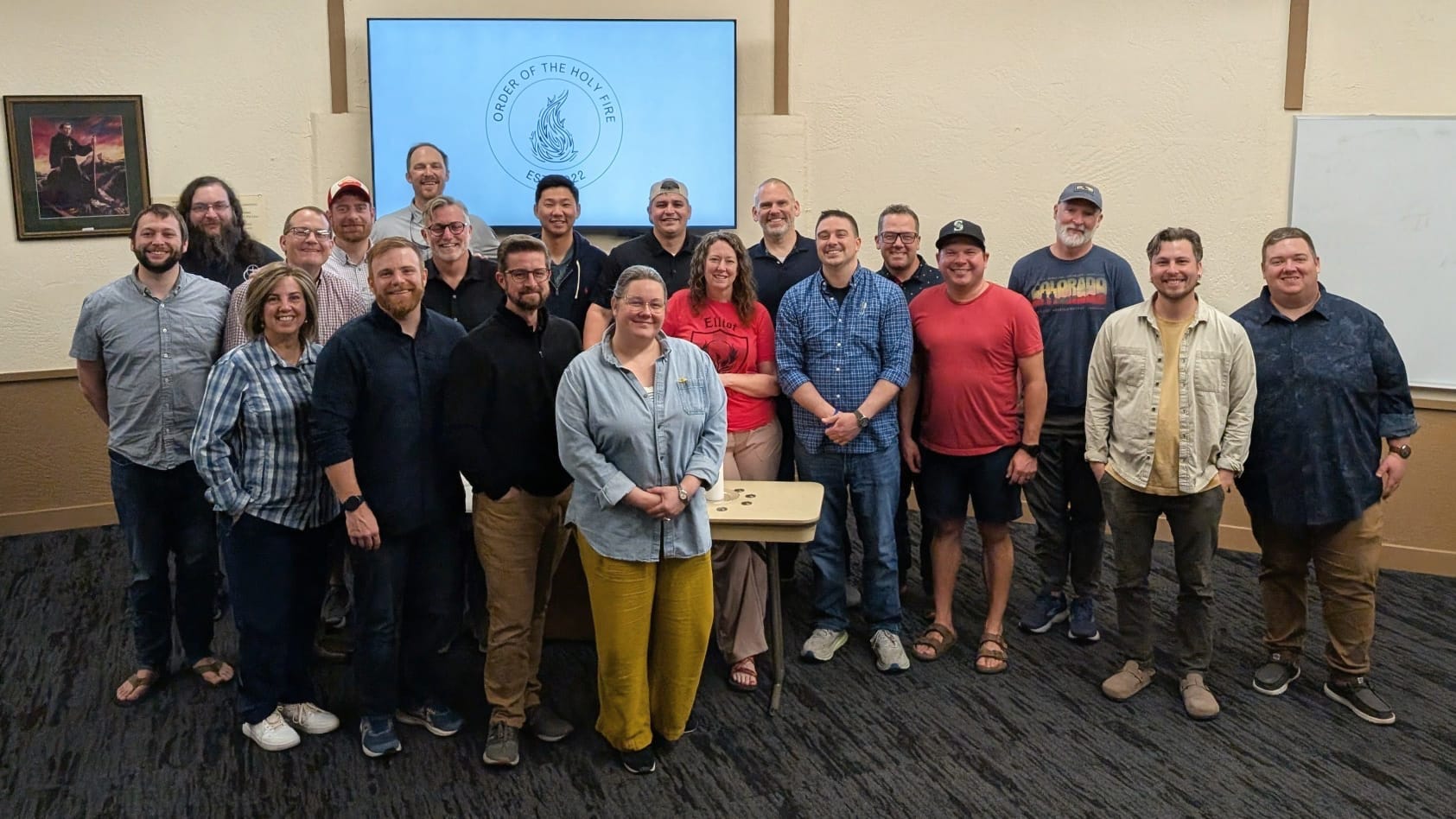
This year at retreat, my friend Luke preached about the love of God for us and for the first time in a while, I didn’t squirm or unknowingly disembody from the message, but rather sat in joyful peace and agreement. At the end of the message, he taught us a simple prayer that frames all of this.
"I Love you, too.”
God’s love is not transactional. It does not fluctuate with the effectiveness of a sermon, the success of a ministry initiative, or the pace of a week’s work. It simply is. Receiving that truth requires more than knowledge and agreement; it requires trust.
As I sat there in silence, the words of that prayer became less awkward and more honest: “I love you… too.”
For me, that moment was another step in a longer journey from notitia to assensus and toward fiducia. The knowledge that God loves me has been present for a long time. The agreement that it is true has also been there. What has taken longer is learning to rest in that love without trying to secure it.
Perhaps many of us live somewhere in that same space between belief and trust. We know that God is good and we affirm that He is faithful, but the deeper work of the heart is learning to entrust ourselves to those truths.
Faith, in the end, is not only about what we know about God. It is about whether we trust Him enough to rest in the love He has already given.
“Jesus loves me, this I know” is not just a children’s song. It is for any child of God!